

Why LLM Traffic Converts Better Than Google Search in 2026
Introduction: The Silent Shift in How Traffic Converts
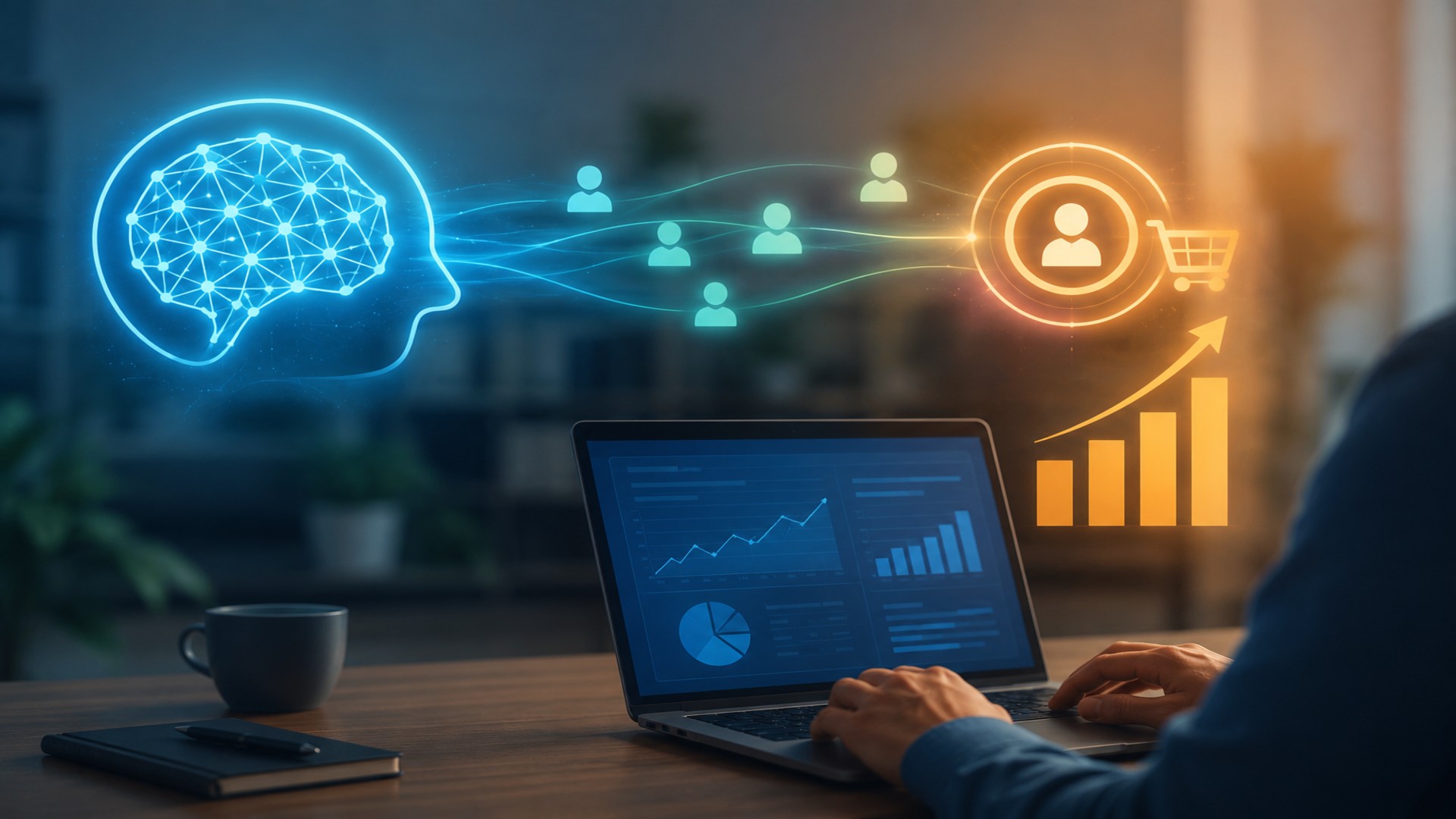
LLM referral traffic now converts at 20%, making it the highest-converting traffic source in 2026 — 61% higher than paid search.
Search behavior is changing fast. For years, PPC and organic Google Search drove digital acquisition. In 2026, a third channel has quietly taken the lead in conversion quality: LLM traffic. Platforms like ChatGPT, Perplexity, and Google AI Mode now shape buying decisions before a user even visits a website. At Pinaka Digital Technologies, we’ve seen this shift firsthand across client accounts, and the data is impossible to ignore.
This blog explains why LLM traffic converts better than Google Search, what LLM referral traffic is, and how brands can build a conversion strategy around it.
What Is LLM Referral Traffic?
LLM referral traffic refers to visitors who land on your website after being cited inside an AI chat response, rather than a search results page.
Unlike organic traffic, where a user scans a list of blue links, LLM traffic arrives after an AI model has already done the research and shortlisting. When ChatGPT or Perplexity cites your page, the click that follows isn’t cold — it’s a visitor seeking validation, not discovery.
Key differences:
- Search traffic is keyword-triggered and intent-isolated.
- LLM traffic is context-driven, from detailed conversational prompts.
- Search traffic shows multiple competing options at once.
- LLM traffic arrives after the AI has already narrowed the choice.
LLM Traffic Share and Conversion Data
LLM referral traffic converts at roughly 20%, compared to a much lower baseline for paid search — a 61% conversion advantage.
This is a structural shift in how demand is captured. Google’s research shows AI Mode queries run nearly three times longer than standard searches, with growing voice and image-based inputs. That extra context means the AI does far more pre-qualification than a search engine ever could.
For any performance marketing agency in Pune managing paid and organic budgets, this stat alone should make LLM SEO and generative engine optimization (GEO) a 2026 priority.
Why LLM SEO Changes the Buyer’s Journey
LLM SEO optimizes content so AI models cite and recommend your brand during the research phase — before the user reaches your website.
In traditional SEO, the journey starts with a query and ends at a landing page. With LLM traffic, most of the journey happens inside the AI conversation. The AI hands off a citation link only when the user needs deeper proof or a next step it can’t provide.
This means:
- Content must earn LLM visibility before the click happens.
- LLM citation is the new equivalent of ranking on Page 1.
- Losing the citation means losing the conversion — there’s no “Page 2.”
Context vs. Keywords: Why LLM Users Arrive Pre-Sold
LLM users prompt AI with detailed context, so by the time they click through, the AI has already narrowed their options.
A Google user typing “best CRM for small business” gets ten results and starts from zero. An LLM user describing their exact budget and use case gets a personalized shortlist. When they click your link, they’re verifying, not comparing.
This is why LLM traffic converts at a higher rate — the AI has filtered out irrelevant options, so every referral click carries stronger intent, even with lower overall volume.
The Trust Factor: AI Citation vs. Paid Ad
Users perceive AI-cited sources as objective recommendations rather than paid placements, giving LLM referral traffic a natural trust advantage.
A Google Ad click carries built-in skepticism. An AI citation, by contrast, feels like an unbiased, evaluated recommendation — raising the trust ceiling for LLM traffic, provided your content matches what the AI told the user.
This is why brands working with an AI SEO company now prioritize citation-worthy content over aggressive ad copy — trust converts better than urgency in AI search.
Fixing the Landing Page Mistake
LLM visitors need depth and verification, not a high-pressure PPC-style page — treating both the same way loses the conversion.
PPC Landing Page
- Stripped-down, minimal navigation
- Aggressive CTA
- Keyword-matched copy
LLM Landing Page
- Rich in resources, easy to navigate
- Builds on the AI’s summary with deeper proof
- Authoritative content explaining why the AI cited you
A gated, pushy page causes LLM visitors to bounce almost immediately.
How to Improve LLM Visibility
Improving LLM visibility requires information gain — original data and expert insight that AI models can’t find elsewhere.
- Publish original research and case studies.
- Add quotes from subject-matter experts.
- Build unique frameworks, not generic summaries.
- Use clear headings and scannable FAQs.
- Strengthen topical authority through consistent publishing.
As the best digital marketing agency in Pune, Pinaka Digital Technologies helps brands rebuild content strategy around these principles — visibility inside AI answers is now as important as ranking on Google.
Fixing Attribution for LLM Traffic
Most LLM traffic shows up as “Direct” or “Referral” without query data, making last-click attribution unreliable.
- Add “How did you hear about us?” fields (ChatGPT, AI Search, Perplexity).
- Move beyond last-click toward assisted-conversion tracking.
- Monitor direct traffic spikes alongside AI feature rollouts.
- Segment reports for known AI referral domains.
Conclusion: Building a 2026 Strategy Around LLM Traffic
LLM traffic isn’t replacing Google Search — but it’s outperforming it on conversion quality. Brands that invest in LLM SEO, citation-worthy content, and AI-optimized landing pages will out-convert competitors relying solely on traditional funnels.
Pinaka Digital Technologies works with brands ready to make that shift — combining SEO, GEO, and performance marketing into one strategy built for how people search in 2026.
Ready to capture higher-converting AI traffic? Talk to Pinaka Digital Technologies about building an LLM SEO and GEO strategy for your brand.
More From The Desk
Best Website Development Company in Pune for AI...

Looking for the Best Digital Marketing Services...
Google Just Confirmed It: Here’s What Ran...

The Ultimate Digital Marketing Strategy for Rea...

Google’s August 2026 Spam Update: What It...

Google Says Technical SEO Time Wasters – Fixing...

How the Best SEO Agencies in Pune Are Adapting ...
Google Says Think Beyond Links: Here’s Wh...
The Future of SEO: How LLMs Are Changing Search...
Pinaka Digital Technologies: Turning Digital St...